The McGonigles in 1880's Leadville
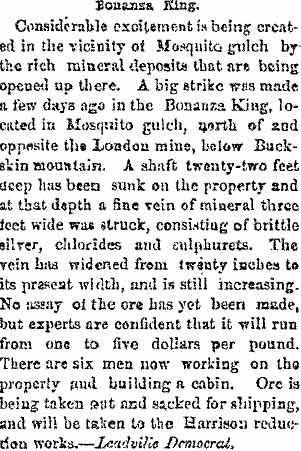
1881 "Big Strike" - Click to Enlarge |
What motivated the McGonigles to move from the civilization to Colorado? Most likely it was the lure of making it rich, as this announcement, like similar news articles, claimed that many people were making fortunes in the mineral-rich Colorado Rockies. We are not certain when the McGonigles arrived in Colorado, but we do know that they are listed for the first time in the Leadville City Record in 1881. I remember mom telling us how her grandparents, Kate and Frank, survived a forest fire by constantly watering their house, including its roof. If this happened during their stay in Leadville, it would have been 1879, as this is when a fire consumed several homes north of Leadville. The only reason that Leadville survived the fire is because the wind changed direction. Unfortunately, the only McGonigle listed in the Leadville Register was Thomas before 1880. So, one of two scenarios is most likely true: (1) the McGonigles lived outside and north the city limits in 1879 and sometime before the 1881 Leadville Register was published, they moved to 6th Street, or (2) they lived in some other Colorado town prior to moving to Leadville. Another story mom used to tell us was how her grandfather owned a general store, and would provide general merchandise "free" to prospectors. In return they would guarantee a percentage of anything they found, which was a common practice in Leadville. There may be some truth to this story, but as you will see, Frank McGonigle didn't own a general store. He owned another type of "store" that he traded his wares in return for a potential share of a prospector's good fortunes. |
|||||||||
|
||||||||||
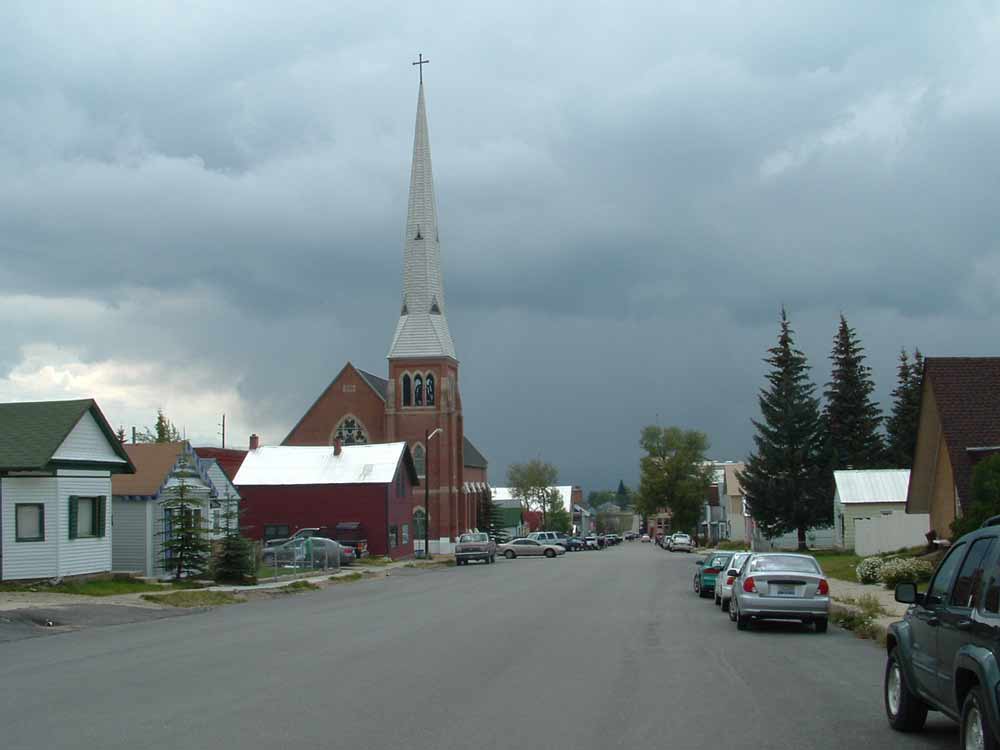
ANNUNCIATION CHURCH
Click to Enlarge |
The Annunciation
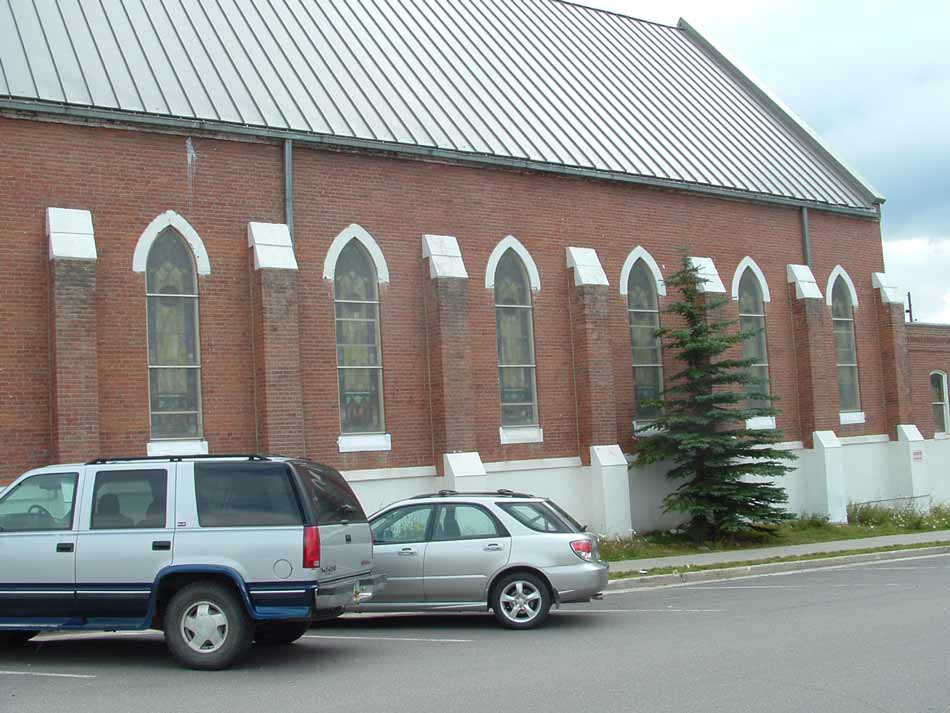
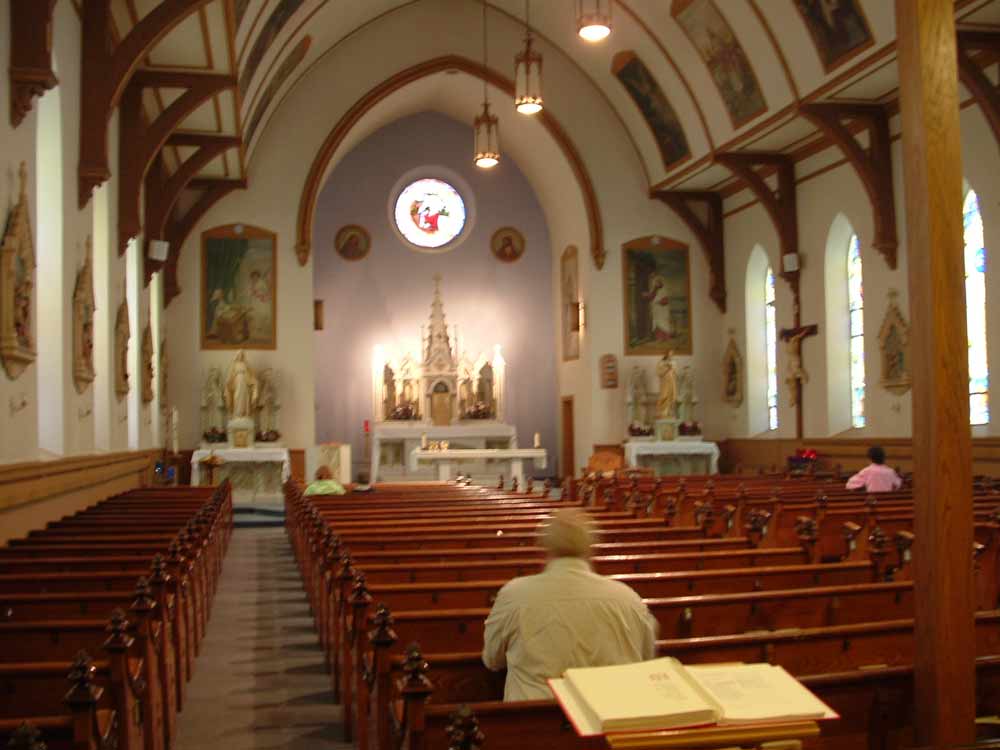
Church in Leadville This is the view of the Annunciation Church on 7th Street. The McGonigles lived on 6th Street almost directly behind this church. While Leadville had a number of maladies including red light districts and gambling, it pointed to the lofty Annunciation Church as the source of a new morality coming to Leadville. Father Henry Robinson was responsible for starting the first Catholic Church in Lake County. He was appointed as a missionary at Fairplay, Colorado, as well as other camps along the Arkansas River in 1875. After his arrival in Leadville, he raised funds to build the brick church that you see here in these pictures. The "unsinkable Molly Brown" took her marriage vows there in 1886. Adelaide McGonigle, our grandmother, was also baptized in this church in the same year. The priest that baptized her was Father Robinson, the same priest who started missionary work in Colorado some 10 years earlier. This is the same church where the McGonigles attended Mass from 1881 to 1888, and in addition to Adelaide, two other sisters were also baptized by Father Robinson in Leadville: Refer to Baptisms to view copies of the Birth Certificates for Cassie, Adelaide and Mary. (Note: these will appear shortly on this site) Children of Kate and Frank McGonigle born in Leadville:
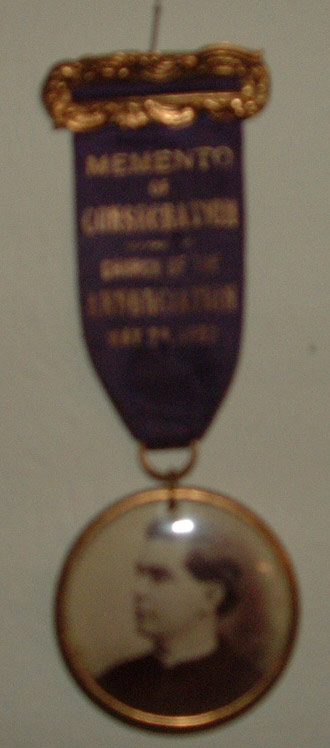
On your right is a commemorative badge with Father Robinson's picture. |
|||||||||
Click to Enlarge |
||||||||||
Inside Church -Click to Enlarge |
||||||||||
Click to Enlarge |
||||||||||
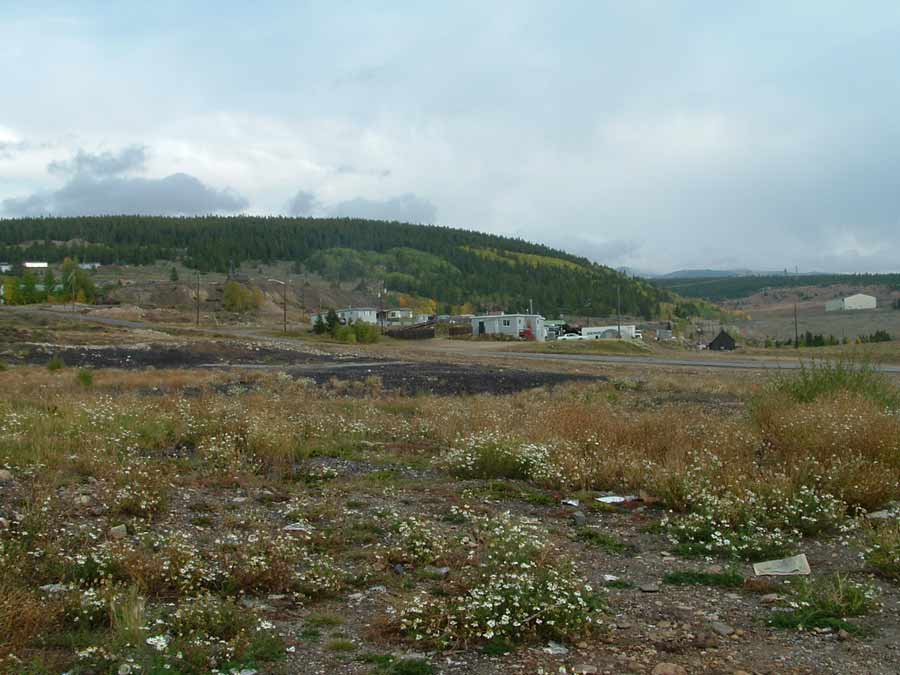
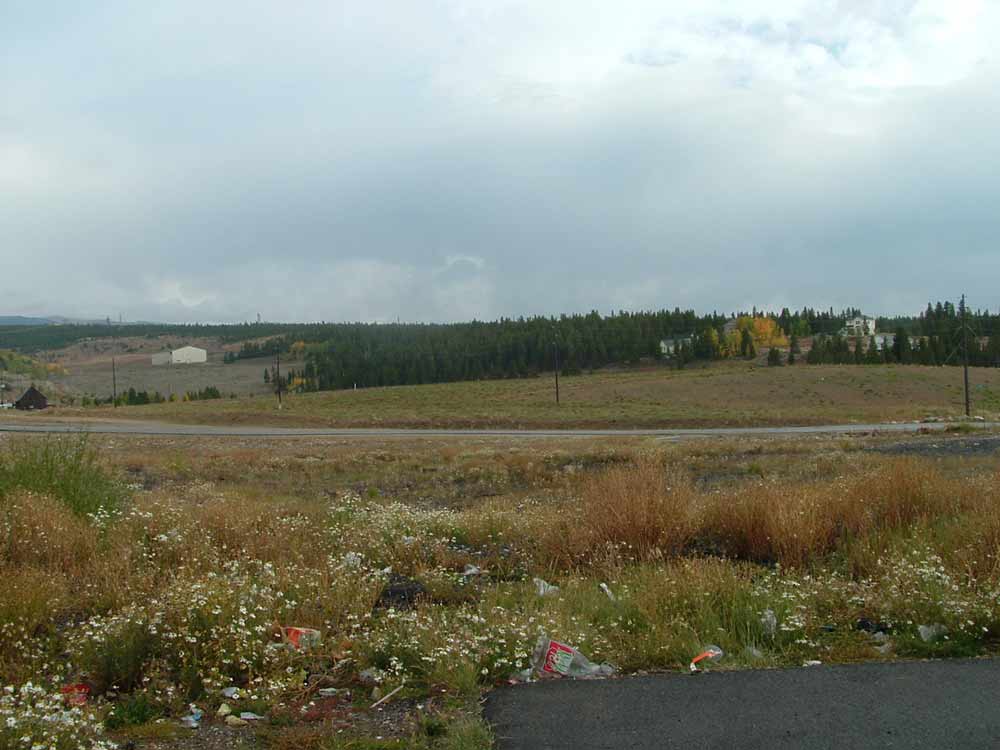
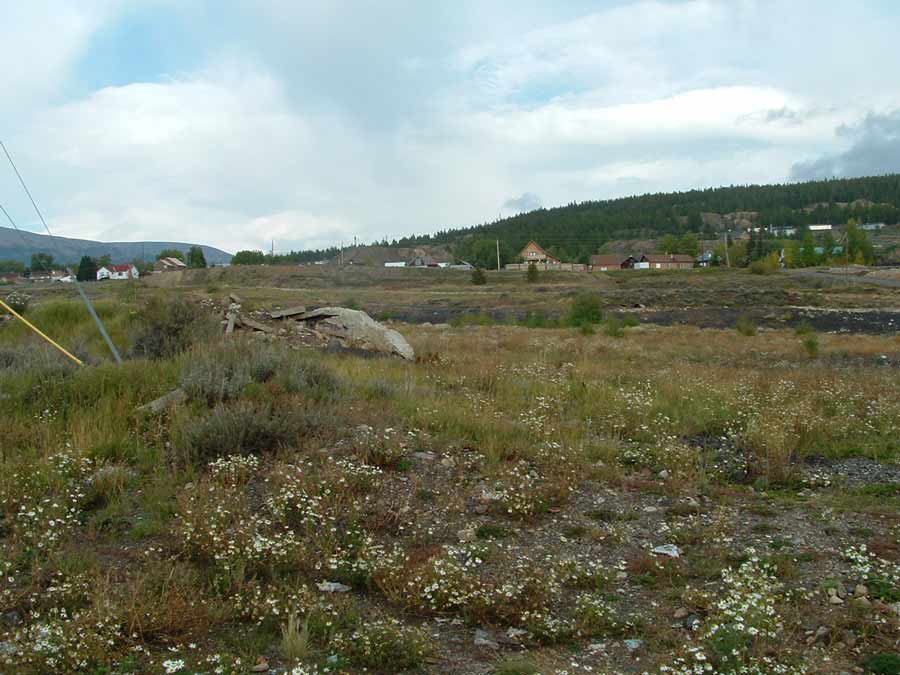
Harrison Reduction Works
Looking Eastward - Click to Enlarge |
Looking Southward - Click to Enlarge |
Looking Northeast - Click to Enlarge |
|||||||||||||||||||||||||||
September 1883 - Click to Enlarge |
The McGonigles and
the Harrison Reduction Works.
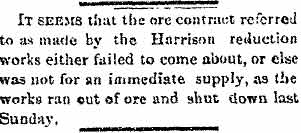
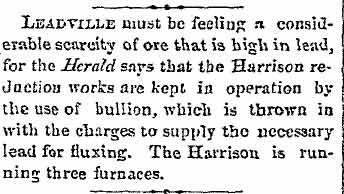
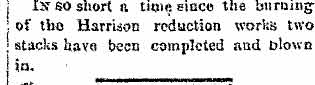
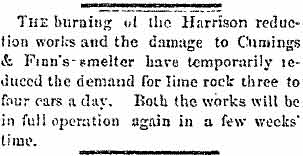
Mining history seldom gives smelters its due, perhaps because of the dismal working conditions and their foul by-products. But without the droning bleaching smelters, Leadville would not have continued to thrive. In 1883 alone, these smelters had on hand approximately 100,000 tons of Leadville ore. By 1883, the Harrison Reduction Works, among others, helped produce 179,000 tons of lead, 32,250 ounces of silver, and 50,000 ounces of gold. The Harrison Reduction Works' massive slag dump, until recently, loomed over the southern end of Harrison Avenue. Today many historically inclined locals lament its removal by the Environmental Protection Agency. Our ancestor, Frank McGonigle worked as a "laborer" in 1886 and 1887 for this company. The pay for laborers, similar to miners, ranged from $1 to $3 a day; the typical pay in this industry was $2.50 a day. Family history indicates that Frank owned his own dray business, and contracted with smelters and similar businesses to haul ore from the mines to be processed. We aren't sure that is what he did for the Harrison Reduction Works, but we do know that his brother John had begun working for this company in 1885. We also know that Frank owned his own dray business in 1881 and 1882, as the Leadville City Record lists his occupation as "teamster". Generally these contractors hauled coal, coke and ore to the smelters and railroads, and apparently was a profitable business. Frank took his profits and opened up a saloon on 6th Street. Family history suggests that he helped his relative, Edward Brennan, run the saloon; however, the Leadville City Record shows that Frank was the owner. This saloon was open from 1884 to 1885, and afterwards we see him employed with the Harrison Reduction Works, which was about 6 blocks from where the family lived. The photographs above show the exact location of this enterprise, and in its zenith, operated three smelting production lines. The articles on your left were found in the local papers of the day. They are from the Fairplay Flume newspaper - Fairplay, at this time, was the principle gold producing center in Lake County (same county as Leadville): September 1883. Plan shutdown due to lack of ore. June 1885. Plant production and top capacity. September 1883. Plan Reopens May 1883. Fire damage at plant. |
|||||||||
June 1885 - Click to Enlarge |
||||||||||
September 1883 - Click to Enlarge |
||||||||||
May 1883 - Click to Enlarge |
||||||||||